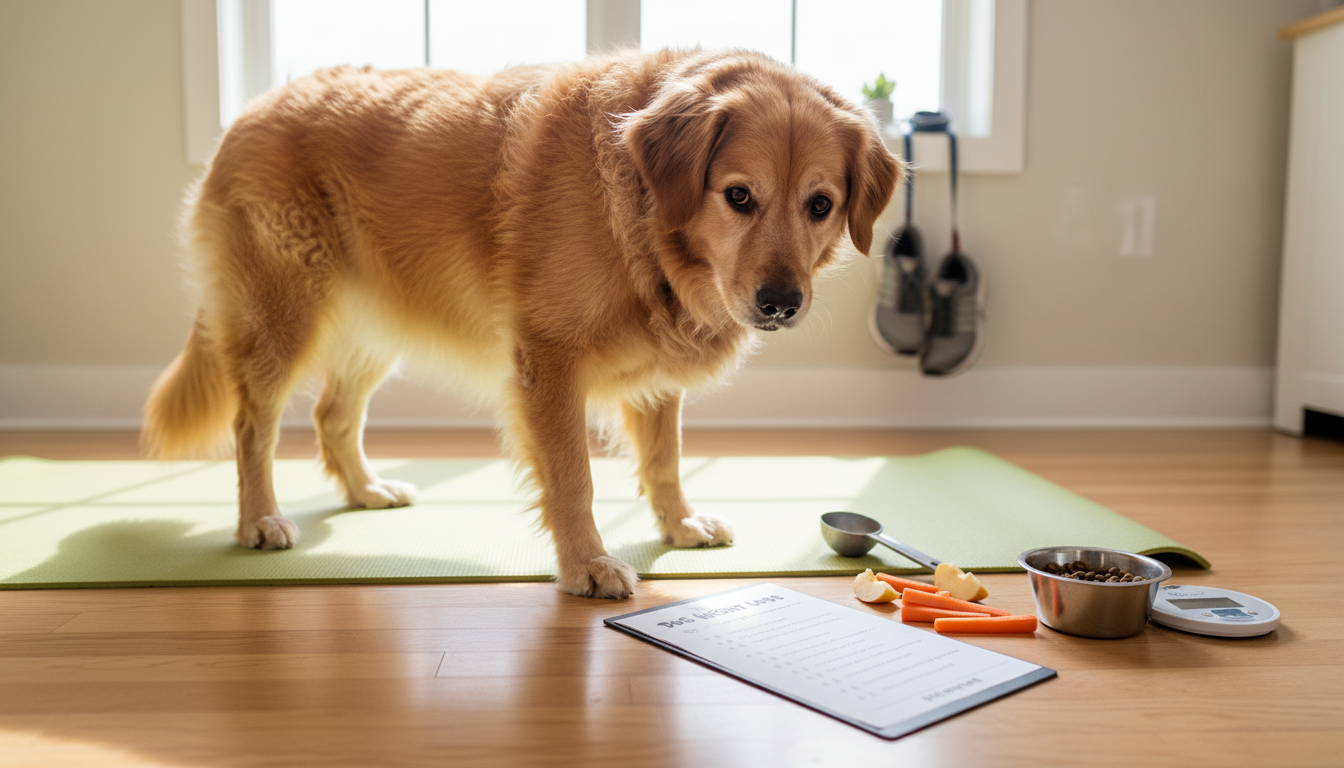
Extra weight can quietly strain a dog’s joints, heart, and energy levels. A clear, repeatable checklist helps turn “we should do something” into simple daily actions—without guesswork, crash diets, or stressful routines. Use the steps below to set a safe goal, measure progress, adjust food and treats, and build movement your pup can enjoy.
Before changing food or activity, make sure weight loss is the right (and safe) priority. Schedule a veterinarian visit first if your dog has breathing issues, mobility problems, is a senior, is a growing puppy, or has any chronic condition.
For trustworthy nutrition basics and feeding guidance, review the WSAVA Global Nutrition Guidelines and the AVMA pet nutrition resources.
Most “mystery weight gain” comes from uncounted extras: treat handfuls, chew calories, and the occasional table scrap. For 3–4 days, measure everything that goes in your dog’s mouth.
| Item | Amount | When | Notes (training, meds, “extras”) |
|---|---|---|---|
| Kibble | ____ grams / ____ cups | AM / PM | Brand + recipe |
| Wet food / topper | ____ tbsp / ____ grams | AM / PM | Mixed into kibble? |
| Training treats | ____ pieces | Walk / training | Type + size |
| Chews | ____ minutes / ____ pieces | Evening | High-calorie? |
| Human food | ____ bites | Anytime | List what it was |
If you want a ready-to-use version you can print or keep on your phone, see Download The “Fluffy to Fit” Dog Weight-Loss Checklist.
Think “steady and repeatable.” Consistency helps protect muscle mass and reduces rebound weight gain.
For context on how common pet obesity is (and why small changes matter), the Association for Pet Obesity Prevention is a helpful reference.
Weight-loss plans tend to fail when dogs feel deprived. The goal is to reduce calories without turning every day into a begging contest.
Treats don’t have to disappear. They just need a plan.
For smarter swaps when your dog loves snacks, try Healthy homemade snack ideas to replace high-calorie treats.
Start with what your dog can do comfortably. A daily easy routine beats a once-a-week “big workout” that leaves them sore.
If stiffness or pain may be limiting activity, it helps to spot the early clues first: Spot early signs of joint pain that can limit activity.
Weight loss is rarely a straight line. The checkpoint approach keeps you calm, consistent, and responsive.
Many dogs do well with a gradual loss of about 1–2% of body weight per week, but the safest target depends on size, age, and health. Your veterinarian can set a personalized range and adjust it if the loss is too fast or too slow.
No—treats usually work best as a budgeted part of the plan. Use tiny pieces, count them in daily calories, and lean on non-food rewards; for training, measured kibble can replace many traditional treats.
Red flags include lethargy, persistent hunger distress, vomiting/diarrhea after diet changes, limping or new soreness, coughing or breathing trouble, or sudden behavior changes. Pause the plan and contact your veterinarian if any of these show up.











Leave a comment