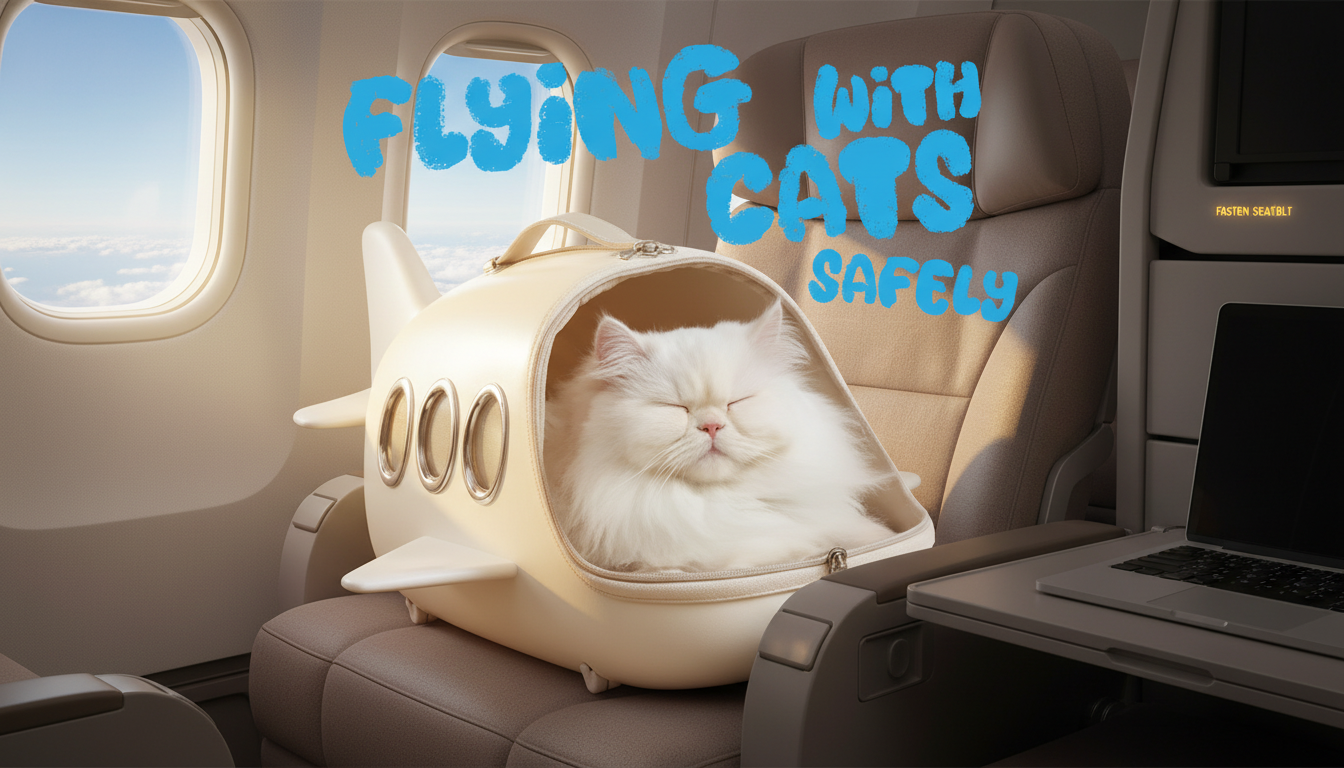
Flying with a cat can go smoothly when comfort, safety, and airline rules are handled early. The goal is simple: keep your cat secure, minimize surprises, and avoid situations that trigger panic (crowds, loud noises, temperature swings, and rushed handling). Use the steps below to plan your flight, prep the carrier, and build a calm day-of routine—so you both arrive safely and settle in quickly.
Start by confirming the trip is truly necessary and that your destination can be made cat-safe. A quiet room, secure windows/doors, familiar bedding, and a predictable routine can prevent hiding, bolting, or stress-related appetite issues. Also consider your cat’s age, temperament, and health—especially if your cat has heart/lung disease or is a brachycephalic breed (flat-faced cats can have a higher breathing risk).
If you’re traveling internationally, check entry requirements as early as possible. Some destinations require a microchip, specific vaccines, parasite treatments, and a health certificate within a strict timeframe. For guidance on official U.S. export and travel rules, consult USDA APHIS – Pet Travel.
| Factor | Lower-Risk Signs | Higher-Risk Signs | What to Do |
|---|---|---|---|
| Health | Recent wellness exam; stable appetite and litter habits | Respiratory disease, recent surgery, dehydration risk | Schedule a vet visit; ask about flight fitness and documentation |
| Temperament | Tolerates carrier; recovers quickly after loud noises | Panic in carrier; self-injury or escape attempts | Start desensitization; consider behavior plan and travel alternatives |
| Trip length | Direct flight under 4–6 hours | Multiple connections; long layovers; overnight delays likely | Choose direct flights; avoid last flight of day; build buffer time |
| Season | Mild temperatures | Extreme heat/cold (especially if cargo travel is possible) | Prefer in-cabin travel; avoid peak temperature days |
Whenever possible, choose in-cabin travel and confirm your airline’s carrier size limits (many require the carrier to fit under the seat). Book nonstop flights to reduce handling, noise exposure, and the chance of delays. If a connection is unavoidable, choose a longer layover so you’re not sprinting through crowded terminals with a frightened cat.
After you book, call the airline to add your pet reservation—many flights cap how many in-cabin pets are allowed. Ask about check-in timing, paperwork, and what happens at security screening. For U.S. screening expectations, review TSA – Traveling with Pets.
Your carrier is your cat’s “safe room” in motion. Choose one that’s well-ventilated, has secure closures (sturdy zippers or latches), and a supportive base so it won’t collapse when you lift it. Your cat should be able to stand and turn around, even if the fit is snug enough for under-seat requirements.
Training is where most “easy travel” wins happen. Leave the carrier out at home so it becomes normal—add treats, catnip, or a favorite toy. Reward voluntary entry and calm behavior rather than forcing your cat inside.
Build up gradually: door open, then short closures, then carrying around the house, then short car rides. Pair low-volume airport or airplane sounds with meals or high-value treats and increase volume over days. Avoid last-minute switches to a brand-new carrier, litter, or food right before departure; predictability lowers panic.
Schedule a vet visit if the airline or destination requires it—or if anything about your cat’s health has changed recently. Ask about documentation timelines for health certificates and vaccines, and carry both paper and digital copies. For general guidance, see American Veterinary Medical Association – Traveling with Your Pet.
Many airlines allow cats to fly in the cabin with an advance reservation, an airline-approved carrier, and a pet fee. Rules vary by route and aircraft, so confirm size/weight limits and under-seat requirements before you travel.
Sedation is not routinely recommended and should only be used under a veterinarian’s direction due to potential breathing and balance risks. Many cats do better with carrier training, calm routines, and veterinarian-approved calming options.
Offer a small meal earlier rather than a heavy meal right before departure to reduce nausea risk. During delays, small sips of water can help if it’s safe to offer; after arrival, return to normal feeding once your cat is calm.












Leave a comment